
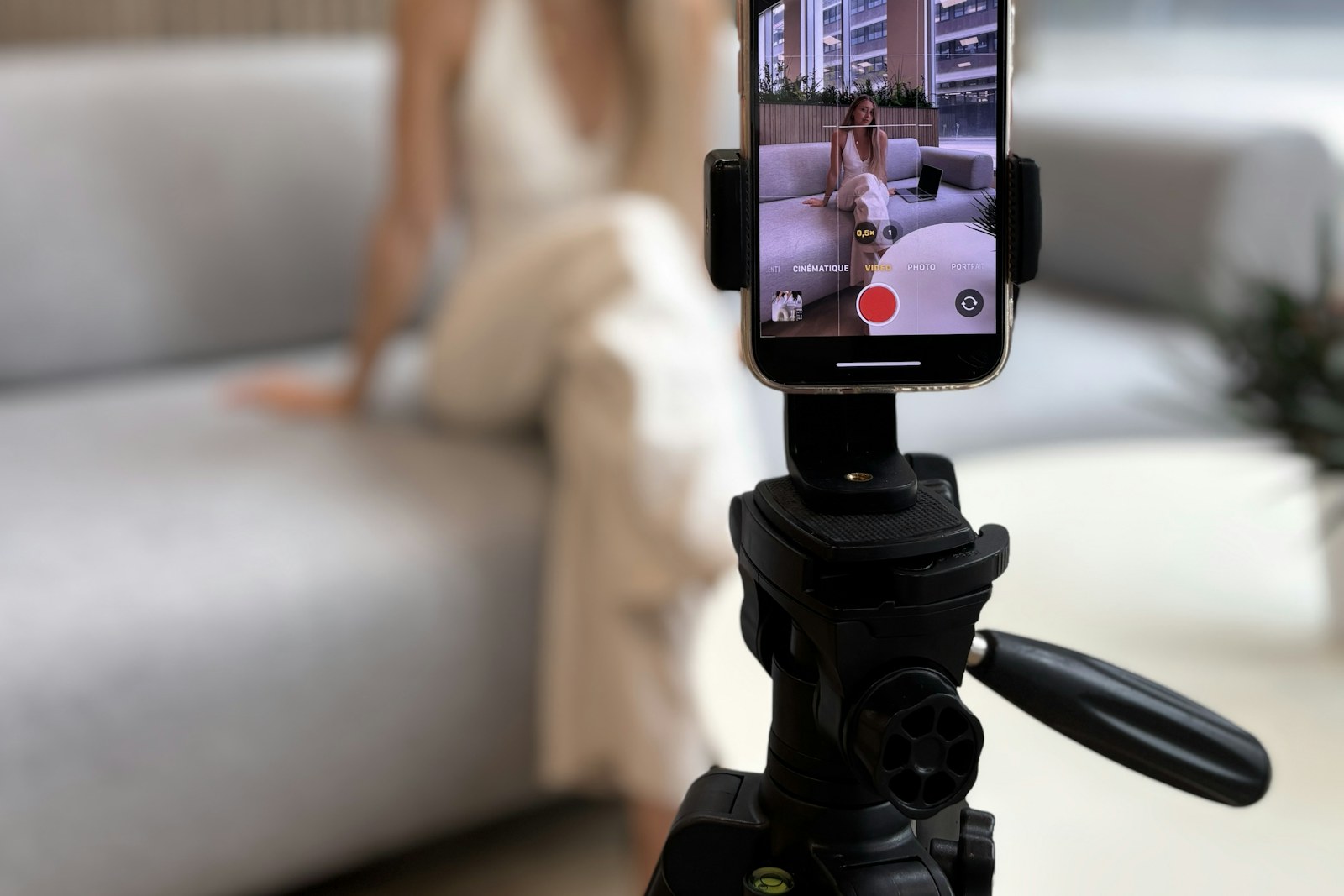
Brand videography for social media is a volume craft, not a showpiece craft: it is shot vertically, cut for the first second, and produced in enough quantity to publish several times a week. Social Signals Marketing shoots, edits, publishes, and promotes it as one in-house team, so the footage becomes a running channel rather than a folder of files.
There is a specific and expensive disappointment that many brands go through. They invest in professional video, the result looks genuinely good, and then it underperforms on social. The reflex is to blame the platform or the audience. The actual cause is usually that the footage was produced to the conventions of a corporate film and then cropped into a feed where those conventions do not apply.
Social video rewards different things: immediacy over polish, a face over a logo, a hook over a build, and vertical framing over a widescreen composition with the subject in the middle. None of that means lower quality. It means quality aimed at a different target.
Social media video is a different craft from corporate video
Both are legitimate and most brands need both, but confusing them is the root of most wasted video budget.
A corporate or brand film is built to be watched by someone who has already chosen to watch it: a visitor on your homepage, an investor in a meeting, a buyer doing research. It can open slowly, build a narrative, and run two minutes. A social media video is built to interrupt someone who did not choose to watch it and is a thumb-flick away from leaving. It has to earn attention in the first second, hold it with movement and pace, work with the sound off as well as on, and land its point in seconds rather than minutes.
The production consequences are concrete. Social video is framed vertically with the subject positioned to survive interface overlays. It is captioned as a default, not an afterthought. It is cut tighter, with fewer establishing shots and no slow reveals. It uses real people and real places instead of pristine studio setups, because the feed treats visible production polish as an advertising signal and skips it. And it is produced in volume, because no single clip carries a channel. Our companion guide to corporate video production and brand films covers the other half of the equation.
The video formats brands actually need
A useful shot list for a brand covers a spread of formats rather than repeating one, because each does a different job in the funnel.
Hook-led talking clips put a founder, expert, or team member on camera answering a real question, which builds trust faster than any other format. Process and behind-the-scenes shows the work being done, and it consistently outperforms polished promotion because people find competence genuinely interesting. Product and detail footage makes what you sell look worth buying, and it doubles as ad creative and website assets. Transformation and before-and-after is the highest-converting format in most service businesses, since the result is the entire sales argument. Customer and testimonial clips let a buyer hear it from someone like them. Venue, location, and atmosphere matters enormously in hospitality and retail, where the feeling of the place is the product. Educational and myth-busting content earns saves and shares, which platforms weight heavily. And reactive or trend-led pieces, shot and published within a day or two, are what make an account feel alive rather than scheduled.
Most brands need four or five of these in rotation. Almost none need all eight at once, and choosing is what keeps a shoot day focused.
The production rules that decide whether social video performs
A handful of decisions account for most of the variance in performance, and none of them require a bigger budget.
Shoot vertically and natively, never crop a horizontal frame after the fact, because the recomposition always looks like an afterthought and often cuts the subject badly. Earn the first second with movement, a face, or a claim, since the skip decision happens before a logo or title card would even appear. Record audio properly, with a lavalier or shotgun microphone rather than the camera's onboard mic, because bad audio is the single most common reason otherwise usable footage never gets published. Caption everything, since a large share of viewing starts muted. Keep the subject in the safe zone away from the platform interface. Shoot far more coverage than the edit needs, because options in the edit are what let one setup become five clips. And favour real environments and real people, because the feed reads studio gloss as advertising.
None of that lowers the standard. It redirects the standard toward what the platform actually rewards.
Volume is the strategy
This is the part that most separates brands that succeed on social video from brands that do not. A channel is not carried by one excellent video. It is carried by publishing consistently for long enough that the platform learns who to show you to and the audience learns to recognise you.
In practical terms that means several posts a week, sustained for months, which is a production problem before it is a creative one. Brands solve it with batching: one concentrated shoot day per month, structured around a shot list of self-contained setups, yielding thirty to fifty publishable clips plus ad variations and stills. Same crew, same location, one day, a month of output. Our 30-day batch system and shoot day checklist document the workflow.
Volume also protects your paid media. Ad creative fatigues within weeks, and a fatigued ad set means a rising cost per acquisition every week it keeps running. A brand with a deep library rotates in something new before performance decays. A brand waiting on its next production watches costs climb in the meantime.
What to expect from a brand videography partner
A good engagement is specific about deliverables, and vague proposals are usually vague for a reason. You should expect a named list before anyone shoots.
That list typically includes pre-production, meaning a shot list and schedule tied to your content pillars rather than an improvised day; the shoot itself with proper lighting and audio; a defined number of edited vertical clips with captions and platform-native versions; horizontal or square cutdowns where you need them for the website or ads; stills pulled from the day; source footage delivered or archived so you are not locked out of your own material; and a revision round with a stated turnaround time.
Two questions separate a partner from a supplier. Who publishes these, and who is responsible if they do not perform? A videographer answers neither, which is fine if you have a team that does. Social Signals answers both, because the same team runs social media management and paid advertising, so the footage goes straight into a calendar and an ad account rather than into a folder.
In-house videographer, freelancer, or agency?
The right answer depends almost entirely on how much video you genuinely need each month.
An in-house videographer becomes efficient at high, steady volume, and gives you immediacy and deep brand knowledge. It also means buying and maintaining equipment, covering absence, and accepting that one person's creative range is your creative range. A freelancer is flexible and cost-effective for periodic shoots, and works well when someone internally owns the strategy and the publishing. An agency or studio makes sense when you want the production, the editing, the publishing, and the promotion handled as one system, and when you want a crew, kit, and range you would not justify buying outright.
A pattern worth noting: many brands hire a videographer and are disappointed, not because the person was weak, but because filming was never the bottleneck. The bottleneck was that nobody owned the calendar, the captions, the publishing, and the ad rotation. Adding a camera to that does not fix it.
How social video feeds everything else
Video produced for social is the most reusable asset in a marketing programme, and treating it as a social-only expense understates its value considerably.
The same clips become paid ad creative, which is where fresh variations directly lower acquisition cost. They become website assets, on the homepage, on service pages, and in landing pages where video reliably lifts conversion. They become sales collateral a rep can send to answer an objection. They become email and messaging content. And the strongest performers become templates, since a hook that worked once will usually work again with a different subject.
This compounding is only available if one team is looking across all of it. When the videographer, the social manager, and the media buyer are three different suppliers, footage gets shot for one purpose and never reaches the other five, which is the quiet reason most brands get a fraction of the value from video that they paid for.
What brand videography and social video production cost
Costs vary by market and scope, but the useful ranges are reasonably consistent. A single shoot day with a videographer producing a batch of edited vertical clips commonly runs from around $1,500 to $6,000 depending on crew size, kit, and edit volume. Ongoing content retainers that include a recurring monthly shoot day, editing, and delivery generally run from around $2,500 to $10,000 per month. A separate polished brand film with a larger crew, talent, and post-production sits higher again.
The number to compare is cost per publishable asset, not day rate. A day that produces one hero film is expensive per asset. The same day planned around batching, producing forty vertical clips plus ad variations and stills, costs a fraction per asset while giving you enough material to publish consistently for a month. When you review a quote, count the deliverables and ask who publishes them. Request a custom quote and we will scope both together.
Frequently asked questions
What is the difference between social media video and corporate video?
A corporate or brand film is made for someone who has already chosen to watch, so it can open slowly, build a narrative, and run for minutes. Social media video has to interrupt someone who did not choose to watch, which means vertical framing, a hook in the first second, tight pacing, captions by default, and a point that lands in seconds. Most brands need both, but shooting one and cropping it into the other is why a lot of good footage underperforms on social.
How many videos does a brand need per month for social media?
For most brands, four to five posts per week is where consistency starts compounding, which means roughly sixteen to twenty pieces per month per main channel. That is only practical through batching: one concentrated shoot day per month against a planned shot list, producing thirty to fifty publishable clips plus ad variations, then editing and scheduling from that library over the following weeks.
How much does short-form video production cost?
A single shoot day producing a batch of edited vertical clips commonly runs from around $1,500 to $6,000 depending on crew, kit, and how many edits are included. Ongoing retainers with a recurring monthly shoot day, editing, and delivery generally run from around $2,500 to $10,000 per month. Judge quotes on cost per publishable asset rather than day rate, since a day planned around batching produces many times the output of a day planned around a single deliverable.
Videography that turns into a running channel
Social Signals Marketing produces brand videography and short-form social media video in house, then runs the social media management that publishes it, the paid advertising that scales the best performers, and the custom software and dashboards that show which clip produced which sale. Because production and publishing sit in the same team, a shoot day is planned around what the calendar and the ad account actually need. We work with brands across Canada and the Gulf, including Dubai, Makkah, Jeddah, and Doha.
Want video that keeps your channels running instead of sitting in a folder? Contact Social Signals Marketing for a free strategy consultation, or explore our client results.