
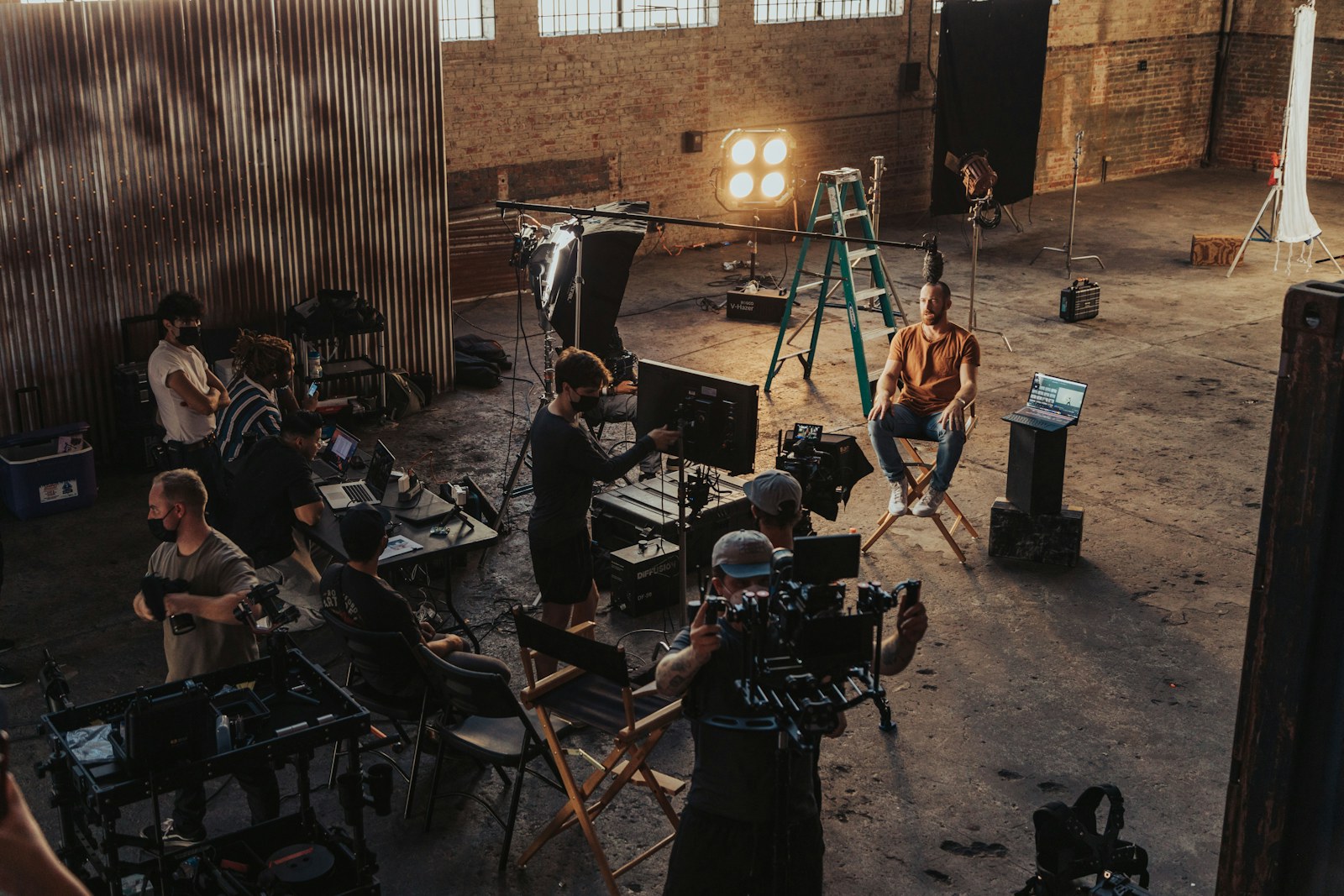
Corporate video production works when a single shoot day is planned to produce a month of content rather than one film, and when the same team that shoots it also publishes it, promotes it, and measures which clip produced revenue. Social Signals Marketing runs videography, social media management, paid advertising, and the custom software behind the funnel as one in-house team, so the footage never sits unused.
Video is no longer a line item that sits beside your marketing. It is the format almost all of your marketing now runs on. Your website converts better with it, your ads stop working without fresh versions of it, your social channels are ranked by it, and your sales team closes faster with it. That makes the question of how you produce video a strategic decision rather than a procurement one.
The gap between companies that get value from video and companies that do not has very little to do with camera quality. It comes down to volume, cadence, and what happens after delivery. A business with one beautiful film a year has an asset. A business with a shoot day every month, a library of cutdowns, and a system pushing them into organic and paid channels has an engine.
What corporate video production actually covers
Corporate video is a broad category, and using the term loosely is how businesses end up buying the wrong thing. In practice it breaks into several distinct formats, each doing a different job.
Brand films tell the story of who you are and why you exist. They live on your homepage, in investor and partner conversations, and at the top of a funnel where someone is deciding whether you are credible. Product and service films show what you actually do, in enough detail that a buyer can picture using it. Founder and executive content puts a real person on camera, which is the single most reliable trust accelerator in B2B and professional services. Testimonial and case study films let customers make your argument for you. Recruitment and culture video sells the company to people you want to hire, which matters more than most marketing teams admit. Event and venue coverage captures things that only happen once. And short-form vertical content, the clips that carry TikTok, Instagram Reels, and YouTube Shorts, is what keeps a brand visible in the weeks and months between the bigger pieces.
Most production companies are set up to deliver the first six. The seventh is where attention actually lives now, and it is the one that determines whether anyone ever sees the rest.
Why one brand film a year no longer works
The traditional model made sense when distribution was bought in slots. You made one commercial, you paid for airtime, and the media buy did the work of putting it in front of people. Feeds do not work that way. They reward frequency and freshness, and they punish repetition. The same asset shown to the same audience for three months produces falling engagement organically and a rising cost per acquisition on paid.
This is the mechanic behind creative fatigue, and it is the most expensive and least discussed problem in video marketing. Your ad account does not need a better video. It needs a different one, regularly. A business that can only refresh creative when it books another production is structurally locked into rising costs between shoots.
The fix is not to lower quality. It is to change what a shoot day is for. Instead of arriving to capture one film, you arrive with a shot list designed to produce that film plus thirty to fifty usable vertical clips, product inserts, testimonial pulls, b-roll for future edits, and stills. Same crew, same location, same day, roughly the same cost, an entirely different output.
What a properly planned shoot day produces
The difference between a shoot that yields one deliverable and a shoot that yields a month of content is almost entirely pre-production. Before the camera comes out, the plan should already name every piece being captured and where each one will be published.
A well-run day typically covers the hero film first while everyone is fresh, then moves through a list of self-contained short-form setups: hooks to camera, process and behind-the-scenes sequences, product detail shots, quickfire question segments, customer or team reactions, and location b-roll. Each short-form setup is captured vertically as well as horizontally so nothing needs to be cropped badly later. Audio is recorded properly for every talking segment, because unusable audio is the most common reason good footage never gets published.
The output from that single day is a hero brand film, a set of cutdowns for the website and sales use, a library of vertical clips scheduled across the next four to eight weeks, a bank of ad creative variations to rotate before fatigue sets in, and photography for the site and social profiles. Our pre-production checklist and 30-day batch system walk through exactly how that is scheduled.
How brand film and short-form work together
These are usually treated as separate disciplines bought from separate suppliers, and that separation is why so much video underperforms. They are two halves of one mechanism.
Short-form earns the attention. It is cheap to distribute, native to the platforms where discovery happens, and it compounds, because an account that publishes consistently accumulates an audience that arrives warm. Brand film converts that attention. When someone who has watched your clips for a month lands on your website, the polished film is what turns familiarity into confidence.
Run one without the other and both underperform. Short-form with no substantial content behind it builds an audience that never converts. A brand film with no short-form engine has nobody arriving to watch it. Produced together from the same shoot, in the same visual language, they reinforce each other, and the cost per useful asset drops sharply because the setup, crew, and location are shared.
Distribution: the part that decides whether video pays for itself
Here is the uncomfortable arithmetic. A film that cost a significant budget and was posted once to a channel with a modest following has an effective cost per view that makes it one of the worst-performing line items in the business. The same film, cut into thirty clips, published across a managed content calendar, and used as the creative base for a paid campaign, reaches a different order of magnitude of people for the same production cost.
Production companies are generally not responsible for any of that, and it is not a criticism of them. Their engagement ends at delivery. But it means that the person who decides whether your video budget produces a return is whoever handles publishing and media buying, and in most companies that is a different supplier, or nobody at all.
This is precisely why Social Signals runs videography and short-form production, social media management, and paid advertising as one team rather than three. The shot list is written knowing which clips are going to be published organically and which are going to be tested as ads. The publishing calendar is built before the shoot. The ad account gets a rotation of fresh creative every month instead of waiting for the next production booking.
How much does corporate video production cost?
Pricing varies widely by market and scope. A single-day shoot with a small professional crew, producing one polished film plus cutdowns, commonly runs from around $4,000 to $15,000. Multi-day productions with larger crews, talent, locations, and post-production sit meaningfully higher. Ongoing content retainers that include a recurring shoot day, editing, and a full publishing calendar generally run from around $3,000 to $12,000 per month depending on volume and channel count.
The number that actually matters is cost per published, useful asset. A $10,000 film that yields one deliverable costs $10,000 per asset. The same $10,000 spent on a day planned for batching, yielding one hero film plus forty scheduled clips and twelve ad variations, costs a fraction of that per asset while producing far more total reach. When you are comparing quotes, compare the deliverable list and the distribution plan, not the day rate.
How to brief a video production partner
A good brief starts with the commercial outcome rather than the creative idea. State what you need the video to do: book more consultations, lift conversion on a specific page, lower cost per acquisition on a campaign, support a launch, or attract a particular kind of hire. Everything else follows from that.
Then answer four practical questions before anyone quotes. Where will this be published, and on which platforms in which aspect ratios? How many separate assets do you need out of the day, and by when? Who is responsible for publishing and promoting them afterwards? And how will you know whether it worked, which means naming the metric and the system that will report it?
If a prospective partner cannot answer the last two, you are buying footage rather than results, and you will need to solve distribution and measurement somewhere else.
Measuring whether your video actually produced revenue
Views, likes, and watch time tell you whether a video performed as content. They do not tell you whether it produced customers. Connecting the two requires infrastructure that most video engagements simply do not include: tracked links and campaign parameters on every distribution point, conversion events wired properly on the site, lead source captured at the point of enquiry, and a dashboard that ties a closed sale back to the asset that started it.
That is a software problem rather than a creative one, which is why Social Signals builds it. Our custom software and SaaS development team builds the dashboards, CRM and booking integrations, and attribution reporting that show which clip, channel, and campaign produced which sale. Once you can see that, the next shoot list writes itself, because you know exactly which content earned money and which did not.
Frequently asked questions
How much does corporate video production cost?
A single-day shoot with a small professional crew producing one polished film plus cutdowns commonly runs from around $4,000 to $15,000, with multi-day productions costing meaningfully more. Ongoing content retainers that include a recurring shoot day, editing, and a full publishing calendar generally run from around $3,000 to $12,000 per month. The more useful comparison is cost per published asset: a day planned for batching produces a hero film plus dozens of vertical clips and ad variations for roughly the same cost as a day planned around a single deliverable.
How many videos can you get from one shoot day?
With proper pre-production, a single day typically produces one hero brand film, a set of cutdowns for the website and sales use, thirty to fifty vertical short-form clips scheduled across the following four to eight weeks, a bank of ad creative variations to rotate before fatigue sets in, and stills. The determining factor is whether the shot list was written around batching in advance, not the length of the day or the size of the crew.
What is the difference between a video production company and a video-led growth partner?
A video production company delivers finished footage and the engagement ends at delivery, leaving publishing, promotion, and measurement to you. A video-led growth partner like Social Signals Marketing shoots the content, cuts it for every platform, publishes it through managed social channels, uses it as the creative engine for paid campaigns, and builds the software and dashboards that attribute revenue back to individual assets, so the footage keeps working instead of sitting in a folder.
Turn one shoot day into a month of growth
Social Signals Marketing combines in-house videography and brand film production, viral-native short-form content, social media management, paid advertising, AI automation, and custom software and SaaS development into one connected system. That means the shot list is written around where the content will be published, the ad account gets fresh creative every month, and a dashboard shows which asset produced which sale. We work with businesses across Canada and the Gulf, including Dubai, Makkah, Jeddah, and Doha.
Ready to plan a shoot that produces a month of content instead of a single file? Contact Social Signals Marketing for a free strategy consultation, or explore our client results.